
A Campus-Based Approach to Millennium Fellowship Recruitment
Insights from Lynn University, United States
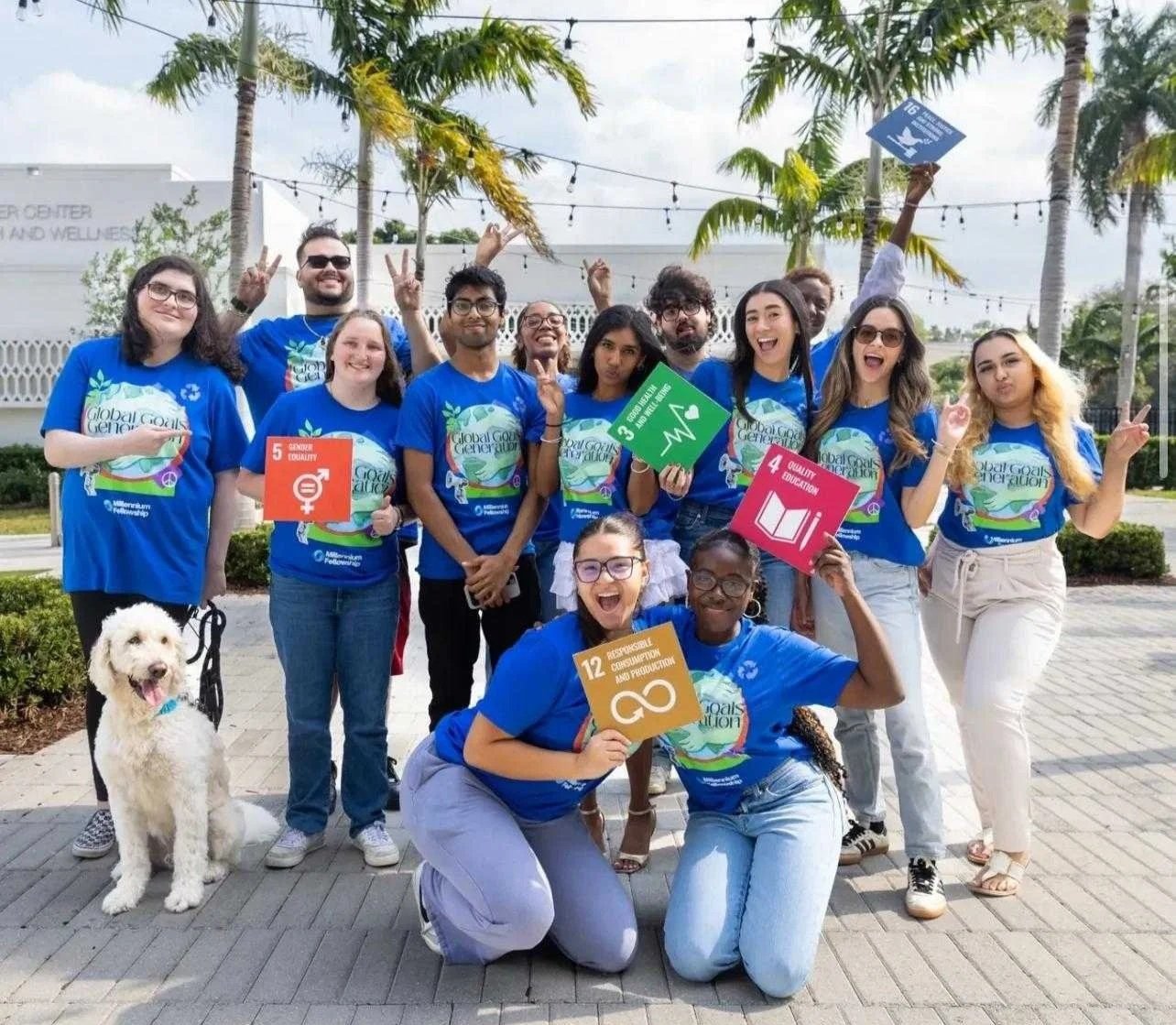
Class of 2025 Millennium Fellows at Lynn University
Since initiating our partnership with MCN in 2018, the Karen S. Lynch Center for Leadership and Social Impact at Lynn University has faced ongoing challenges in effectively reaching the entire eligible student population to promote program applications. Consequently, fostering interdepartmental relationships has been vital to the success of our initiatives. We have actively worked to expand our network within the institution, enabling us to leverage the support of various student-facing departments.
Leveraging Multiple Communication Channels
For instance, we collaborate with the Marketing department to feature our opportunities in the weekly newsletters distributed to students and parents. Additionally, we provide information regarding the application process for display on televisions located in common areas, allowing students to engage with this information casually.
Engaging Advisors and Faculty as Recruitment Partners
We also partner with Advising, recognizing that academic advisors have the best understanding of their students and can identify those who are ideal candidates for our programs. We share our promotional materials with advisors and encourage them to motivate potential applicants among their advisees. Furthermore, we present our offerings at the monthly Academic Council meetings, bringing together all faculty members to discuss the various opportunities available, thereby enabling faculty to actively encourage student participation. Their close interaction with students positions them to recognize suitable candidates effectively.
Center-Led Outreach and Social Media Engagement
Additionally, the Center produces its own newsletter, disseminated to all students, faculty, and staff, ensuring widespread awareness of available opportunities. We maintain a dedicated social media presence to promote applications, share success stories from past participants, and respond to inquiries from interested students. Our social media strategy includes collaborative posts and storytelling endeavors with other departments, enhancing our reach.
Reducing Barriers Through Strategic Recruitment Timing
By broadly disseminating information about our programs, we effectively reduce barriers to access, ensuring that all eligible students have opportunities to learn about the program. We strategically limit recruitment efforts throughout the year to avoid desensitization; we find that a concentrated recruitment period in February and March- leading up to application deadlines- encourages students to engage seriously with the application process. This narrower application window promotes timely and focused efforts from students.
It is important to note that Lynn University is a relatively small institution, with approximately 3,500 students, including graduate and online learners; therefore, our strategies may not yield the same results in larger organizations. However, we are confident that the relationship-building aspect of our approach and the collaborative efforts among departments and colleges at Lynn University significantly enhance our ability to connect with students. It is this deeply collaborative approach that we recommend as a best practice to ensure access to opportunities to students across colleges, departments and fields of study.

Best Practices shared by
— Dr. Antonella Regueiro
Director of the Center for Social Impact, Lynn University
MCN Civic Learning Council Member